
A place of calm in the storm: Devonport Medicare Mental Health Centre
Posted on September 7, 2026
How the Devonport Medicare Mental Health Centre is working with local services to support people in distress
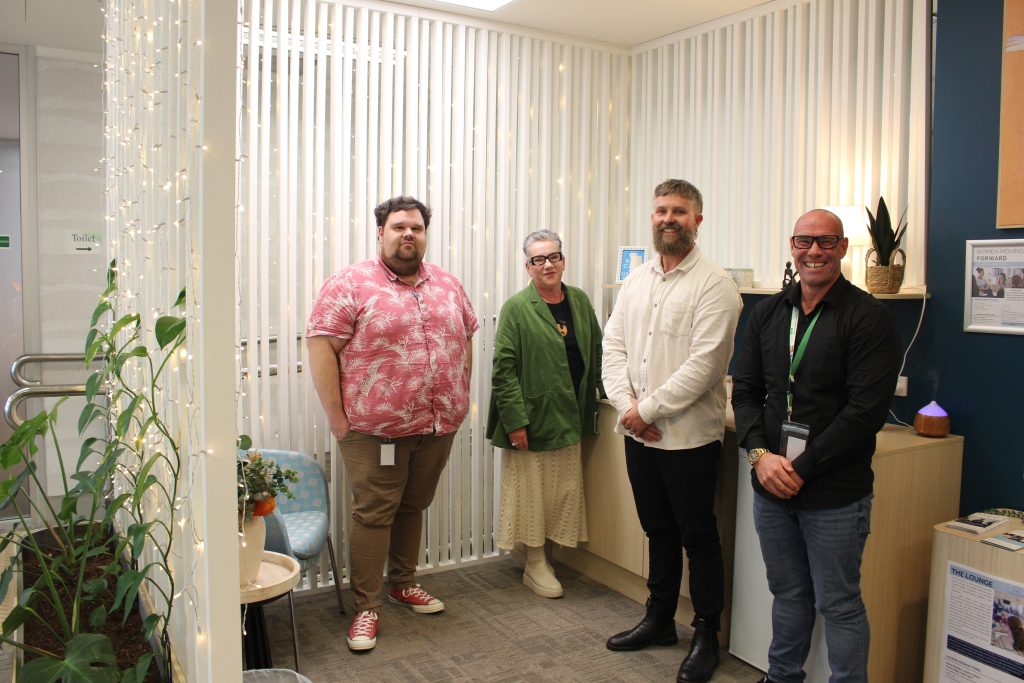
Walking into the Devonport Medicare Mental Health Centre, you feel a sense of calm wash over you.
Himalayan salt lamps emanate a warm, soft glow. Soothing music and the scent from essential oil diffusers create a sense of safety. Fairy lights, warm colours and comfortable seating replace the feel of a traditional clinic.
This all culminates in creating an environment designed to help people feel comforted and safe at a time when they may be overwhelmed and in need of support.
The centre is operated by Stride, whose operations manager Jenny Dodd says the physical environment is a deliberate part of how the service works.
“We really look at it as a comforting space, a non-clinical space,” she says. “A home away from home … with those warm colours and that gentle background noise.”
The first thing many people notice when they walk into the Devonport Medicare Mental Health Centre is the atmosphere. The warmth of the atmosphere is matched by the kind, engaging staff, who greet people gently as they arrive.
But behind the calm environment is something much bigger than the building itself.
The centre is becoming a hub for mental health support in the area—a place that not only provides immediate care, but actively connects people, services and the broader community, says Stride regional manager Di Hawkridge.
“We’re not duplicating what other services are doing,” she says.
The service, funded by the Australian Government through Primary Health Tasmania, offers free walk-in mental health support to adults experiencing mental health challenges. Family, friends and carers needing guidance and support can also use the service.
There are also Medicare Mental Health Centres in Launceston and Burnie, with another opening in Glenorchy this year.
Adults seeking support can arrive without an appointment, referral or mental health treatment plan and be helped by mental health clinicians and peer workers with lived experience of mental health challenges.
The staff will listen to understand what’s happening, provide what’s needed in the moment, then work alongside the person to put in place helpful next steps. Often, the support extends well beyond the walls of the centre itself.
For mental health clinician Ryan Summers, that can mean helping someone navigate a complex system by facilitating “warm handovers” to other organisations once the centre had provided support, as he did with one client recently.
“The other worker came and sat down, all three of us in a room,” he says. “I was there as a point of support for my client while they did the onboarding into the new service.”
Those connections are a core part of the model.
The team regularly works with GPs, hospitals, alcohol and drug services, housing organisations, family violence services, community groups and other service connections across north-west Tasmania. Staff say the goal is not simply to refer people elsewhere, but to make those transitions feel safe, supported and human.
Community engagement coordinator Shannan Maciejewski has played a key role in building those relationships since the service opened.
“Shannan’s been instrumental in the opening of the service and passing information out to the community and inviting service providers in,” Jenny says. “He’s really well connected within the community.”
Shannan spends much of his time out in the community, meeting organisations, attending events and introducing people to the service. He recalls building a connection with Youth, Family and Community
Connections, an organisation supporting young people, families and individuals across the north-west region, which happens to be located just up the road.
“I reached out and met with them intentionally because we needed to know who we could call on,” Shannan says. “Now, if someone needs that support, we know exactly who to contact.”
Shannan recently facilitated a session with women from multicultural communities through the Migrant Resource Centre in Burnie.
During the workshop, participants discussed the barriers they faced accessing mental health support.
“They talked about stigma, culture, fear of not being understood and not knowing where to go,” he says.
The experience reinforced the importance of meeting communities where they are and tailoring engagement approaches to different groups.
The centre’s location in the Devonport CBD has also helped strengthen collaboration between organisations.
“We’ve had other services physically walk people through the door,” Shannan says. “They’ll say, ‘I’ve got someone here who’d like to talk with someone.’”
The team believes those personal relationships make it easier for organisations to refer confidently.
“When services know the people here, they feel comfortable sending someone in because they know what experience they’re walking into,” Shannan says.
The centre is also increasingly being used as a community space.
Education sessions and group programs are beginning to emerge as part of the service’s evolution, with external organisations using the space to deliver mental health support and education initiatives.
Jenny says the vision is for the centre to become more than a one-on-one clinical service.
“We regularly have organisations come in to run sessions like mental health first aid and mindfulness programs,” she says. “We’re really embracing the co-location of services and building it as a community space.”
The team hopes those activities will help reduce social isolation and strengthen community connections, while also making mental health support feel more approachable and less clinical.
For the team, the work is ultimately about helping people feel less alone while also making the mental health system easier to navigate.
Ryan says sometimes the most important thing is simply helping someone leave with a plan and a sense of connection.
“If someone walks out feeling heard, listened to and acknowledged, that’s the best indicator we’ve done our job properly,” he says.
As the Devonport Medicare Mental Health Centre continues to grow, staff hope it becomes known not only as a place people can turn to, but as a trusted part of the north-west community—one that brings services, organisations and people together.
“When someone needs support, they need it now,” Shannan says. “We want people to know we are here for them.”
Learn more about Medicare Mental Health Centres here.
This story features in Issue 22 of our Primary Health Matters magazine. Click here to read the rest of the issue.