Connecting and learning across allied health
Posted on October 20, 2026
How a series of networking opportunities is helping allied health professionals build relationships that support everyday practice
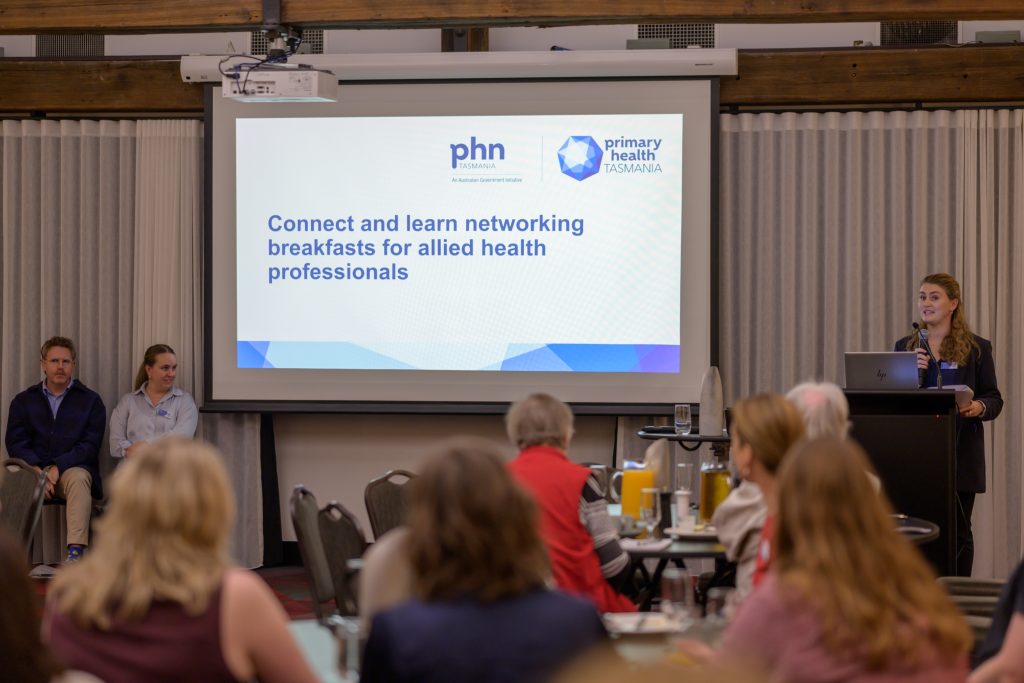
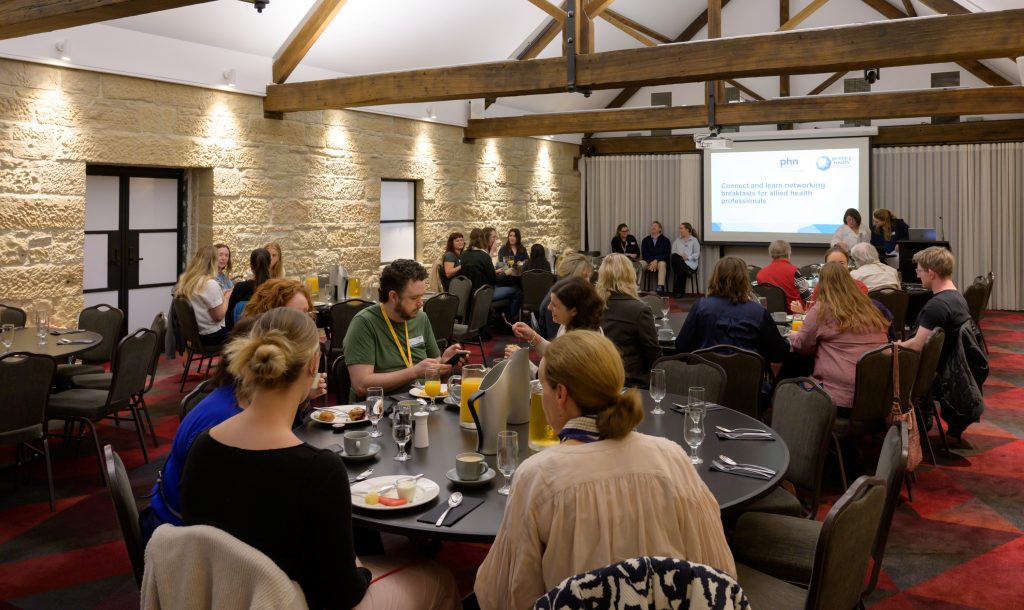
Across three early mornings in Tasmania’s north, south and north west, allied health professionals arrive before the working day begins, ready for conversation.
They come from different disciplines, practice settings and communities, brought together by a shared interest in connecting with others working in primary care.
These gatherings mark the first round of Primary Health Tasmania’s Connect and Learn networking sessions, a new series created to give allied health professionals a space to meet, share experiences, and build relationships that support everyday practice.
Daniella Polita, an occupational therapist at Elevate OT and the Tas Ergonomic Collaborative, is one of those attending to connect with peers across the sector.
“Networking with other allied health professionals plays a really important role in supporting multidisciplinary care, especially in a place-based context like Tasmania,” she shares.
Working across different settings, funding models and client cohorts, Daniella says it isn’t always easy to see the full scope of what other allied health professionals do, even within the same profession.
Having structured opportunities to connect makes it easier to move beyond professional silos and better understand the realities of others’ practice.
For many participants, those early conversations can translate into practical benefits in day-to-day work.
“That shared understanding means we can support more respectful collaboration, clearer communication and obviously better outcomes for clients in our community,” Daniella says.
“Knowing where the resources are and being able to direct people to those resources, but also having the connection to be able to direct people to human resources, is better facilitated when we actually connect with people.”
She adds that when pathways can be hard to navigate, those relationships become even more important.
“When it’s difficult to find pathways, we tend to default to ‘I can’t help you with that’,” Daniella says. “But being able to say, ‘I don’t work in that area, but I know someone who does’ makes a big difference.”
Talita Welmans, a clinical exercise physiologist and community engagement and education coordinator at MS Plus, says her interest in the event reflects a broader focus on strengthening care for people with chronic conditions.
“I’ve been really focussing on how to bring multidisciplinary care together for people with chronic conditions, especially those with neurological conditions, so I was really excited about the event,” she shares.
“I’m really passionate about networking and getting to know the practitioners around you.”
That connection, Talita explains, supports more informed, patient-centred care.
“Often in my initial assessments for a client, I’m asking them about all sorts of aspects of health and symptoms, some of which clients might not realise is related to their condition or may not think is relevant to exercise physiology,” she says.
“But I’m trying to figure out what else is happening so I can refer them to the right sources, if needed.
“For me, it’s really important to know where to send clients to and for what information—how we can continue the chain of care and have that patient-centred care really at the forefront.
“Especially as referrals to clinicians and practitioners who have relevant experience in a specific field of interest are better positioned to support those clients long term.”
Talita also describes how rare it is to have time and space to connect across roles and settings, saying it’s important to build clear communication channels between providers.
For Greg King, a care coordinator with Cancer Council Tasmania who works closely with allied health services, the opportunity to connect face-to-face with practitioners across the state is reason enough to attend.
“I thought it was a good opportunity to connect with allied health professionals and explain our process, what we do, and also get an idea about their referral pathways,” he says.
“And on a really human scale, just to meet people who are out and working, because not everyone knows about every other organisation.”
Primary Health Tasmania’s Emma Atterbury says feedback from the organisation’s Allied Health Network Advisory Group highlighted the need for more regular, informal opportunities for allied health professionals to connect, both with Primary Health Tasmania and with one another.
The Connect and Learn series was developed to respond to that need for connection.
“We know allied health professionals are doing highly skilled work in very busy, complex environments,” Emma says.
“What Connect and Learn has reinforced is the value of creating time and space for people to connect, to better understand who’s working locally, what they do, and how that fits within primary care.
“This series is particularly important in supporting the workforce during a period of significant national reform, including changes to how chronic conditions and mental health care are managed, as well as ongoing improvements to digital health systems.”
Alongside networking, the sessions introduce participants to a range of support available for allied health professionals, including Tasmanian HealthPathways, digital health initiatives, education and events, and system navigation support.
“That really increased my awareness of the scope of Primary Health Tasmania, so that I can say, ‘there is a pathway’, or direct people to the website if I can’t direct them to people I know,” Daniella says.
Now a quarterly fixture on the events calendar, the sessions will continue to prioritise networking while also creating space for guest speakers and focused discussion on different practice areas and emerging topics, shaped by what allied health professionals themselves want to explore.
Greg says he plans to return: “I definitely want to come to the next one and I encourage other people to go as well.”
Learn more about our work supporting allied health professionals here.
This story features in Issue 22 of our Primary Health Matters magazine. Click here to read the rest of the issue.