
How young people are shaping headspace Eastern Shore
Posted on October 7, 2026
How young people are at the heart of designing their own health services at headspace Eastern Shore
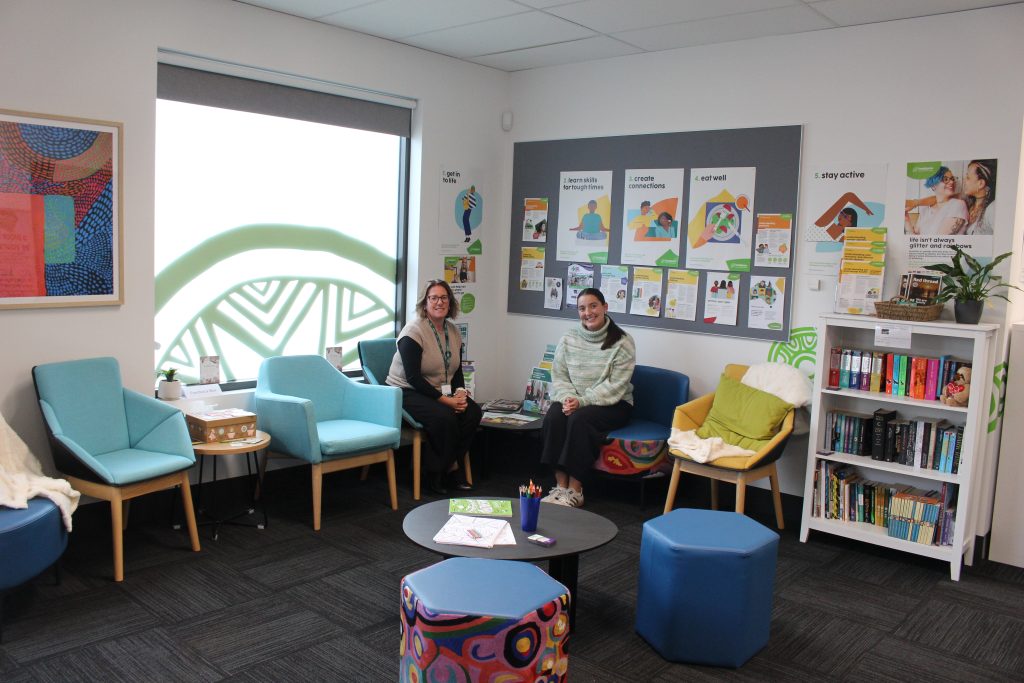
Imagine walking into a job interview and finding a young person sitting on the panel, asking questions alongside senior staff.
It might seem unusual at first. But at headspace Eastern Shore it’s intentional, and makes complete sense.
headspace Eastern Shore is the newest of five headspace centres in Tasmania, alongside services in central Hobart, Launceston, Devonport and Burnie headspace centres are funded by the Australian Government through Primary Health Tasmania, which has commissioned Each to operate the
Eastern Shore service since it opened in December 2025.
When recruiting staff for a service designed for young people, headspace services manager Rach Sylvester and the team wanted young people involved in deciding who would make them feel safe, welcome and understood.
That’s where 20-year-old Kate came in.
Kate has played a hands-on role in shaping the service – from helping interview prospective staff to contributing feedback on the look, feel and accessibility of the new centre.
“At the end, I was like, would I feel comfortable talking to them? Do I think young people would feel comfortable talking to them?” Kate says.
“Everyone here passed the vibe check, which is great.”
The approach reflects the broader philosophy underpinning headspace services nationally: genuine co-design with young people, not consultation after decisions have already been made.
For Kate, who is studying teaching at university while working as a teacher’s assistant in a high school, the opportunity has been both eye-opening and empowering.
“I just wanted to help make it an inclusive place where even I would feel comfortable coming here,” she says.
Kate’s perspective shaped practical decisions throughout the fit-out of the Rosny Park centre. She helped review furniture, colour palettes and room layouts, thinking carefully about how young people might experience the space.
“We didn’t want it to be too overwhelming, but we also wanted it to be calming and somewhere everyone felt safe and comfortable,” she says.
Privacy was another key consideration. Located on a busy road in Rosny Park, the centre initially raised concerns about visibility and stigma for young people seeking support.
“When we came into the blank build, we kind of looked out the window like, ‘Oh, everyone can see us in here’,” Kate says.
The solution included frosted windows, soundproofed rooms and thoughtful design elements aimed at helping young people feel at ease from the moment they walk through the door.
“I just really liked that the doors automatically open,” Kate says.
“It felt really welcoming because it wasn’t like you have to wonder if they’re open or not. They just open when you walk in.”
She says the friendly reception staff and warm environment also help create a different experience from a traditional clinical setting.
“When you come in, it doesn’t feel like when you go to other clinics and they’re like, ‘What’s your name? Are you here for an appointment?’ The staff are really friendly,” she says. “That first impression is so important. Otherwise, people will just walk out.”
Rach says having young people involved in recruitment has strengthened the hiring process in unexpected ways.
“What started as a ‘vibe check’ actually became really detailed and valuable feedback,” she says. “Kate was giving us amazing insight that was different to what we were thinking, because obviously we’re sitting in our own lenses.”
The process also highlighted how important it is for staff to communicate respectfully and authentically with young people.
“If they can’t comfortably speak to a young person in the interview, how are they going to work with young people every day?” Rach says.
The service has also focused heavily on representation across its workforce, including Aboriginal staff members, LGBTIQA+ staff, and clinicians with diverse backgrounds and identities.
“The staff that you have will bring people like them,” Rach says.
Young men are a particular priority group for the service, with national data showing lower engagement rates despite high rates of suicide among young men aged 15 to 24.
The centre itself offers far more than mental health support alone. Services include GP appointments, sexual health support, alcohol and other drug services, and support with education, employment and training.
“When I first started here, I thought it was just for mental health,” Kate says. “I didn’t know there was a nurse or a GP or they could help with work and training and all these different things.”
Accessibility was also central to choosing the Rosny Park location. Kate says being close to schools, public transport and other health services makes it easier for young people to access support independently, particularly if family members are not supportive.
“You could just say you’re going to Eastlands or going to the movies,” she says. “Whereas if you were going somewhere more isolated, people might ask more questions.”
The centre’s consortium model continues to keep young people involved in shaping services as the centre grows.
Kate is also youth co-chair of the centre’s Consortium.
An important part of any headspace centre, the Consortium is a collaborative advisory group bringing together local schools, health services and community organisations to ensure the centre reflects the needs of young people in the region. It supports coordination across services and connection to appropriate care.
“We can say we’re doing great, but statistics and data back it up,” Kate says.
For Kate personally, the experience has also helped build confidence and professional skills she hopes to take into her future teaching career.
“I feel like I’m so ahead of a lot of my peers because I’ve actually seen how these services work,” she says. “And now I know where to direct young people if they need support.”
The result is a service shaped not just for young people, but with them. And sometimes, that starts with a young person sitting on the interview panel, asking the questions. It’s an approach that clearly works, as headspace Eastern Shore recently received this feedback from a clinician from a different service.
“I spoke with Sam* this week, and he discussed being comfortable in sessions, and finding it easy to talk,” the clinician said. “Even though that may be minimal, it’s a huge step for Sam.”
Learn more about headspace Eastern Shore here.
* Client’s name changed for privacy reasons
This story features in Issue 22 of our Primary Health Matters magazine. Click here to read the rest of the issue.