
General practitioners and clinical staff are the highest professional group disclosed to by individuals experiencing family and sexual violence, yet many feel they lack the resources, confidence or strategies to respond safely and effectively. Evidence shows a full‑time GP may see up to five unidentified women experiencing abuse each week.
The Pathways to Safety workshop, developed by the Safer Families Centre, the University of Melbourne, is a practice-centred education program designed to strengthen the clinical skills required to recognise, respond and refer patients experiencing family and sexual violence using a trauma- and violence-informed approach.
“A health professional may be the only person that sees a victim who is experiencing family violence. Your report could save a life.”
Jasmine, WEAVERS lived experience group
“The training changed my own feelings of readiness to bring up the topic of FV.”
Adam, GP training participant
Participants will learn how to create safer practice environments, safely engage with patients experiencing sexual and family violence, and assess current clinic protocols and resources to better enhance their clinic’s response.
Additional workshops for clinical staff will be offered to provide a whole-of-practice approach to addressing the issue of family and sexual violence. Details can be found here.
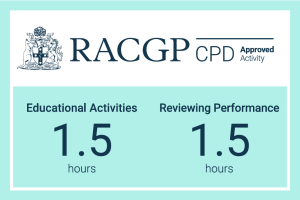
This event is approved by ACRRM and RACGP for 1.5 hours Educational Activities and 1.5 hours Reviewing Performance.
Don’t live in north Tasmania? Please submit an expression of interest to be notified when a workshop will be held in your area via this form.
Learning outcomes:
- Identify respectful and culturally safe ways to engage with patients experiencing family and sexual violence and assess risks.
- Distinguish families presenting with symptoms and signs of family and sexual violence.
- Assess safety risks for women and children experiencing family and sexual violence.
- Apply appropriate clinical responses to disclosures of family and sexual violence in Tasmanian general practice, including assessing readiness to take action, supporting safety planning, and facilitating access to Tasmanian support services and referral pathways.
- Assess current clinic protocols and resources for responding to family and sexual violence to identify areas where changes are needed to enhance response.
Speaker information:
A/Prof Jennifer Neil is a clinician, educator and researcher in primary care and family violence. Jennifer graduated from the University of Melbourne in 2003 and achieved her Fellowship of the Royal Australian College of General Practitioners. She is the Curriculum and Assessment Lead for General Practice at Monash University and has led the development of a trauma-informed medical education approach. Jennifer has trained hundreds of health professionals across Australia in family violence, authored multiple curricula and has co-authored two chapters and a supplementary chapter in the Royal Australian College of General Practice ‘White Book’ Guideline on abuse and violence. She has also contributed to the RACGP ‘Red Book’ guideline on preventive health. She is the deputy chair of the RACGP specific interest group on abuse and violence in families and the secretary for WONCA (World Family Doctor Organization) Special Interest Group on Family Violence Steering Committee. She is currently undertaking a PhD and her topic explores GPs who have been survivors of family violence and their experiences.
Anj van Rooyen is a family violence specialist who brings deep practice experience, critical insight, and a strong commitment to social change. With a background in education and social work, she has worked in the specialist family violence sector for over ten years as a therapeutic practitioner, therapeutic practice lead, and educator. Anj’s work is informed by an intersectional feminist framework and a human rights lens, with a particular focus on power, privilege, and systemic harm. She approaches education as a relational and reflective practice, prioritising learning environments that are safe, accessible, and responsive to the lived experiences of participants. Through dialogue, shared understanding, and allyship, Anj seeks to support meaningful shifts in practice and contribute to more just responses to family and sexual violence.
Chantel Peters is a Peer Support Worker and community volunteer and is currently studying a Bachelor of Social Work. Drawing on her lived experience, Chantel is passionate about supporting women affected by family, domestic and sexual violence. She believes in creating safe, welcoming spaces where people feel heard, supported and empowered. Alongside her studies, Chantel has volunteered in the community for many years and is committed to advocating for positive change and helping others build confidence, connection and hope.
For more information on Strengthening the response to family and sexual violence in Tasmania: A primary care learning initiative, including Pathways to Safety workshops and collaborative learning opportunities, visit the Primary Health Tasmania website.
Disclaimer: Deidentified registration and evaluation data for this workshop will be shared with the SAX Institute for reporting to the Department of Health, Disability and Ageing. All data handling will comply with Primary Health Tasmania’s ISO27001 Certification requirements